
![f((-\infty,1])=[-5,+\infty) \Rightarrow \boxed{f(x)\geq -5, \forall x \in (-\infty,1]}(1)
f([1,+\infty))=[-5,+\infty) \Rightarrow \boxed{f(x)\geq -5, \forall x \in [1,+\infty)}(2)](/forum/ext/geomar/texintegr/latexrender/pictures/196537b977060222dca153c9fec73476.png "f((-\infty,1])=[-5,+\infty) \Rightarrow \boxed{f(x)\geq -5, \forall x \in (-\infty,1]}(1)
f([1,+\infty))=[-5,+\infty) \Rightarrow \boxed{f(x)\geq -5, \forall x \in [1,+\infty)}(2)")
Από τις
 προκύπτει το ζητούμενο.
Επιστροφή στην ειδική αναζήτηση
προκύπτει το ζητούμενο. συνεχής με
  για κάθε
 ![x \in [a,b]](/forum/ext/geomar/texintegr/latexrender/pictures/af3c1adca188345d2a91c0d13a891b9f.png "x \in [a,b]") , τότε ισχύει πάντοτε
, τότε ισχύει πάντοτε 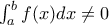 .
. , δεν βλέπω το γιατί να θέλει απόδειξη.
 δεν παρουσιάζει ολικό μέγιστο/ελάχιστο στο
  ,οπότε ίσως πρέπει να αναφερθεί στο ερώτημα ότι πρόκειται για τοπικά ακρότατα.
 ,
, 
 ,
, 